
Chinese automotive market shifts toward smartphone-style vehicle lifecycles
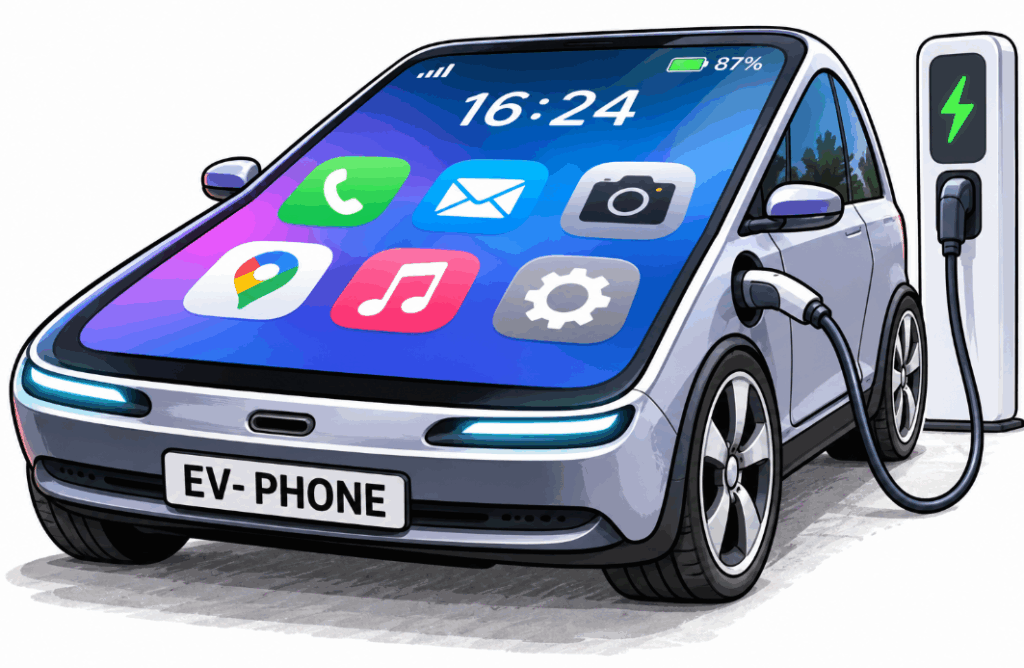
The Chinese automotive sector is undergoing a profound cultural and economic transformation, with electric vehicles increasingly being viewed not as long-term investments, but as fast-moving consumer products to be bought, used and replaced like mobile phones.
Industry reports indicate that some subcompact and mid-range EVs in China are deregistered for recycling after just three to five years. This contrasts sharply with Western markets, where average vehicle lifespans exceed ten years in Germany and twelve years across the United States and wider Europe.
Several key factors are driving this “disposable” approach to vehicle ownership. Frequent hardware and software updates quickly make older models feel obsolete, mirroring the smartphone market.
High model turnover suppresses resale values, restricting the development of a robust secondary market. Scarcity and high costs of replacement parts often lead insurers to write off vehicles following minor collisions rather than fund repairs.
Despite these trends, the “throwaway car” narrative faces pushback. Domestic automotive media and international drivers frequently highlight long manufacturer warranties, strong value for money, and examples of older Chinese-built vehicles remaining reliably on the road.
Brian Gregory, Policy Director for the Alliance of British drivers, says: “Chinese cars are deliberately designed as throwaway consumer electronics products. What’s the overall environmental impact of deliberately creating mountains of disposable, fashion-item vehicles that last a third – or less – of the lifetime of an ICEV? How environmentally friendly is that?”
So how will the UK Government try to further persuade its drivers to give up their beloved ICE cars? Debates surrounding Prime Minister Andy Burnham’s attitudes towards older vehicles focus on April 2027 Vehicle Excise Duty (VED) rises. Rather than banning cars over 10 years old, the Treasury is increasing VED in line with Retail Prices Index (RPI) inflation.
For 2001-2017 cars, annual rates will range from £20 to £825 depending on CO2 emissions, with standard family models rising by roughly £15-£20.
Critics argue these inflation-linked hikes unfairly penalise lower-income drivers who cannot afford newer vehicles. Conversely, Treasury officials state that RPI uprating is standard fiscal practice across governments to maintain public revenue and encourage cleaner transport choices.
However, the days of battery driven electric vehicles (BEVs) could be numbered, as semiconductor microwave plasma ignition replaces traditional spark plugs with solid-state 2.45 GHz radio-frequency chips to ignite fuel volumetrically rather than with a single spark.
This electrodeless approach prevents component wear and creates a cloud of reactive radicals that burns ultra-lean air-fuel mixtures rapidly and evenly. By preventing engine knock at high compression ratios, developers aim to push thermal efficiency toward 60% while drastically cutting nitrogen oxide (NOx) and particulate emissions.
Additionally, the system is fuel-agnostic – capable of igniting petrol, hydrogen, or synthetic e-fuels – making it ideal for compact, ultra-clean hybrid range extenders. Food for thought.
In conclusion, Brian recommends: “Let the technologists do the technology, not the half-wit politicians!!”
ENDS
Author Paul naylor is Communications Director for the Alliance of British Drivers (ABD).
For all media enquiries, contact Paul Naylor on 07914 304 504 or email paul@mediaandyou.co.uk
Notes: Founded in 1992, the Alliance of British Drivers (ABD) is the leading organisation promoting the interests and concerns of drivers in the United Kingdom.
The UK has over 37 million drivers – that is a majority; we should stop tolerating the way we are treated by the government and local councils.
Cars, vans and taxis account for 80% of the mileage of all trips in the UK, and over 65% of goods being carried by road. The road network, and the people who use it, are of vital importance to the nation’s economy. Drivers should expect the road network to be improved and maintained to a standard that is fit for purpose. They should be able to use the roads in a safe and responsible manner without being subject to unreasonable charges, restrictions or penalties.