
FairFuelUK has urged Prime Minister Andy Burnham to scrap the UK’s 2030 ban on new pure petrol and diesel car sales, citing an estimated £400bn in economic costs and a policy contradiction as Europe reconsiders its own 2035 targets.
Campaign founder Howard Cox criticized the accelerated domestic deadline as an arbitrary political imposition that threatens consumer choice and automotive competitiveness.
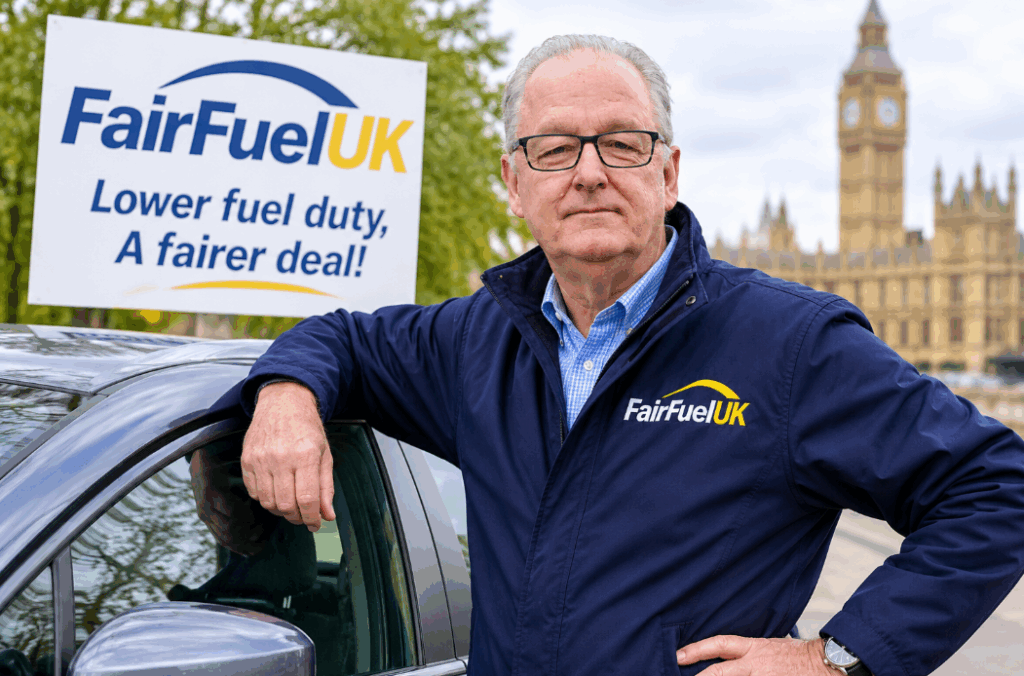
“We are told Britain needs a more mature, pragmatic relationship with Europe. Fine. But if we’re going to start listening more closely to what is happening across the Channel, perhaps the Prime Minister could start with cars,” says Howard in his article on Substack.
The UK plans to end sales of new pure petrol and diesel cars in 2030 (with all new cars and vans 100% zero-emission by 2035), while the EU is actively debating watering down its 2035 100% CO2 reduction rules.
The UK government’s commitment remains intact, as detailed in Electrifying’s ZEV mandate review, with full hybrids and plug-in hybrids are permitted between 2030 and 2035, while mild hybrids are phased out.
“Interestingly – and perhaps somewhat predictably – there has been a slower-than-targeted EV uptake (under 27% of new car sales in 2026 against a 33% target) and carmaker lobbying has prompted government consultations on how to flex intermediate targets and review progress by next year,” says Paul Naylor, Communications Director for the Alliance of British Drivers (ABD).
The EU Environment Committee has moved to lower 2035 CO2 reduction targets to 87.5% for cars and 80% for vans, which would let some hybrid, petrol, and diesel vehicles be sold past 2035. High battery costs, competition from Chinese rivals, and pressure from countries like Germany have fueled calls for more flexible, technology-neutral rules.
Neither the 2030 nor 2035 rules ban owning, driving, insuring, servicing, or buying used petrol and diesel cars already on the road. Clean air or ultra-low emission zones in cities can still charge non-compliant vehicles regardless of sales bans.
Howard Cox and the ABD have similar stances regarding EVs.
“I’m not anti-EV,” says Howard. “I’ve said this before, and I’ll keep saying it. This isn’t about being anti-electric vehicle.
“EVs are part of the future of motoring. If motorists want them, manufacturers can produce them at prices people can afford and the infrastructure makes them practical, then brilliant. Let them compete.”
Indeed that’s the point. Let them compete. politicians are remarkably fond of telling drivers what’s good for them.
“Faster battery breakthroughs, hybrids, range extenders, or alternative fuels could cut emissions at lower cost than a single mandated pathway,” continues Mr Naylor.
“Long-distance haulage, towing, commercial fleets, and drivers without home charging face practical and cost hurdles that pure battery-electric vehicles do not solve equally for everyone.
“The ABD, along with industry groups and other motoring bodies have warned that strict sales targets and steep discounting pressures can strain manufacturers and pass costs onto consumers.
“Let people have the choice. It’s as simple as that.”
ENDS
Visit https://howardcox.substack.com/p/burnhams-eu-reset-but-europe-is-rethinking?utm_source=post-email-title&publication_id=3533910&post_id=225788337&utm_campaign=email-post-title&isFreemail=true&r=2bg2cy&triedRedirect=true&utm_medium=email for the full article
Author Paul Naylor is Communications Director for the Alliance of British Drivers (ABD).
For all media enquiries, contact Paul Naylor on 07914 304 504 or email paul@mediaandyou.co.uk
Notes: Founded in 1992, the Alliance of British Drivers (ABD) is the leading organisation promoting the interests and concerns of drivers in the United Kingdom.
The UK has over 37 million drivers – that is a majority; we should stop tolerating the way we are treated by the government and local councils.
Cars, vans and taxis account for 80% of the mileage of all trips in the UK, and over 65% of goods being carried by road. The road network, and the people who use it, are of vital importance to the nation’s economy. Drivers should expect the road network to be improved and maintained to a standard that is fit for purpose. They should be able to use the roads in a safe and responsible manner without being subject to unreasonable charges, restrictions or penalties.