
Electric vehicles (EVs) now make up the vast majority of the fastest-depreciating cars in the UK, according to the latest data analysis from Auto Express and CDL Vehicle Information Services.
The comprehensive study, which evaluates vehicle value retention over a standard three-year or 36,000-mile ownership period, reveals that 9 out of the top 10 and 15 out of the top 20 fastest-depreciating cars on the market are fully electric. Conversely, rugged 4x4s, mechanical sports cars, and budget-friendly hybrids continue to heavily resist depreciation.
The data highlights a steep decline in residual values for several prominent EV models, with some losing nearly three-quarters of their original purchase price within 36 months.
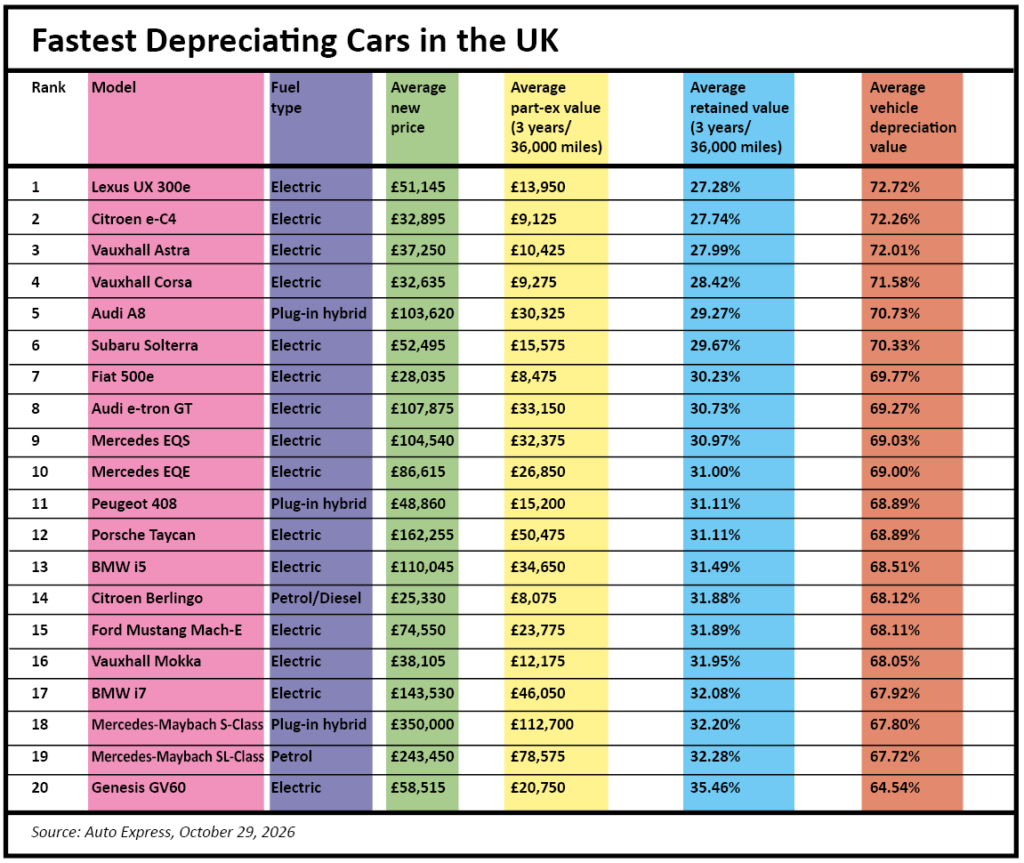
The fastest-depreciating models in the UK include:
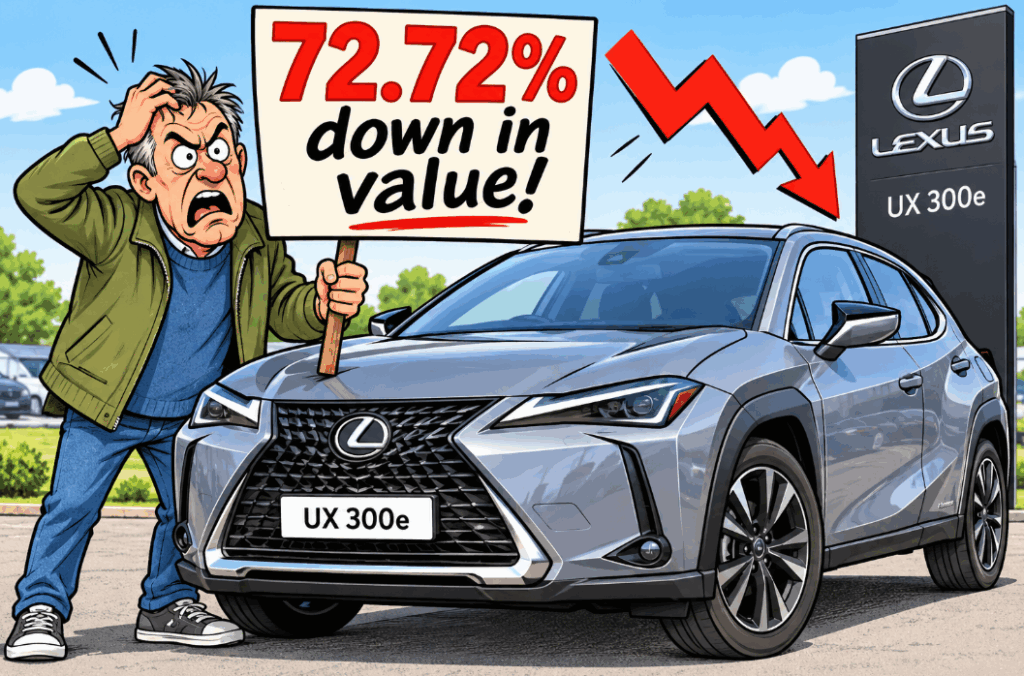
- Lexus UX 300e: Retaining just 27.28% of its value. An average new price of £51,145 plummets to £13,950, representing a staggering loss of £37,195.
- Citroën e-C4 (Extended Range Collection): Retaining 27.74% of its value, dropping from an average new price of £32,895 down to £9,125.
- Vauxhall Astra Electric GS: This has a low 27.99% value retention rate.
In stark contrast to the EV slump, certain enthusiast models and high-demand utility vehicles are bucking the trend, driven by scarcity, long manufacturer waiting lists, and strong consumer demand.
The slowest-depreciating models in the UK include:
- Porsche 911 Coupe (GT3 Manual): Leading the market by retaining an exceptional 69.17% of its value, proving that mechanical, enthusiast-focused sports cars remain an elite investment asset class.
- Land Rover Defender 90 (D350 X-Dynamic SE): Retaining 67.11% of its value, with an average new price of £66,760 holding strong at £44,800 after three years.
- Dacia Bigster (1.8 Hybrid 155 Extreme): Retaining 66.19% of its value, proving that affordable, mid-tier family hybrids are highly sought after on the second-hand market.
Championing the cause for EVs is the Mercedes-Benz G-Class Electric (G 580 EQ): Bucking the standard EV trend by retaining 61.75% (and up to 70.09% depending on trim), thanks to its iconic status.
Experts point to two defining trends shaping today’s automotive market.
First, entry-level and mid-tier specifications consistently outperform top-tier luxury trims in retention percentages, as they attract a broader pool of used buyers.
Second, pure consumer demand and manufacturing caps protect traditional off-roaders and sports cars, while a rapidly evolving tech landscape and changing incentives continue to put downward pressure on mainstream electric vehicle residuals.
Paul Naylor, Communications Director for The Alliance of British Drivers, said: “Electric vehicles (EVs) remain a turn-off for a large portion of UK drivers due to a combination of high upfront costs, practical charging hurdles, and widespread skepticism about infrastructure.
“As we can see from these very telling figures, plummeting second-hand EV values have made buyers cautious about how much their car will be worth a few years down the line. This translates to the car market we have today.”
ENDS
Author Paul Naylor is the Communications Director for The Alliance of British Drivers (ABD).
For all media enquiries, contact Paul Naylor on 07914 304 504 or email paul@mediaandyou.co.uk
Notes: Founded in 1992, the Alliance of British Drivers (ABD) is the leading organisation promoting the interests and concerns of drivers in the United Kingdom.
The UK has over 37 million drivers – that is a majority; we should stop tolerating the way we are treated by the government and local councils.
Cars, vans and taxis account for 80% of the mileage of all trips in the UK, and over 65% of goods being carried by road. The road network, and the people who use it, are of vital importance to the nation’s economy. Drivers should expect the road network to be improved and maintained to a standard that is fit for purpose. They should be able to use the roads in a safe and responsible manner without being subject to unreasonable charges, restrictions or penalties.